Before You Decide
Which Math Programme
Is Right For Your Child...
Can I Ask You One Question?
If Your Child Is Already...

Learning
mathematics
in school
Perhaps
attending
tuition

Working through
assessment
books

And genuinely
putting in
the effort...
Why do you still feel they haven't reached the potential you believe they have?
What if better math isn't about learning more math?
Before we answer
that question...
Let's ask another.
Imagine two children
getting exactly the same
math question wrong.
Should they both receive
exactly the same help?
Imagine These 3 Children Answering Exactly The Same Math Question Incorrectly.

Child A
guessed.

Child B
didn't know where to begin.

Child C
knew how to solve it but misunderstood the question.
They all got the same answer wrong.
But did they all make the mistake because of the same cause?
If children can get the
same math question wrong
for different reasons...
Why do almost all of us
look for the same solution?
When children struggle in math,
many parents naturally look for:
Another tuition programme
More assessment papers
More practice
There's nothing wrong with that.
But here's something worth thinking about...

Imagine bringing your child to a doctor because they have a fever.
A good doctor doesn't immediately prescribe medicine.
They first ask,
"What's causing the fever?"
Because different causes require different treatments.
Shouldn't we first understand what's holding our child back... before deciding how to help?
A Correct or Wrong Answer Shows the Result.
It Does Not Show How Your Child Thinks.
A final answer tells you whether your child got the question right or wrong.
But it does not tell you:
What they noticed and what they overlooked
How they interpreted the problem
How they organised the information
How they decided where to begin
What they did when their first approach did not work
Whether they could adapt without being guided
These are the clues that reveal why a child struggles, or whether a child who is doing well is capable of thinking more deeply and independently.
Before deciding what your child needs next, you first need to see how they think.

This Matters Whether Your Child Is Struggling or Doing Well
If your child is struggling despite receiving tuition & help
They may know the methods after being taught, but still:
Freeze when questions look different
Wait for help before beginning
Guess instead of reasoning through the problem
Struggle to apply what they have learnt independently
Their results may show that they need help, but not why they remain dependent on it.
If your child is already doing well
They may calculate accurately and score well, but still:
Get stuck on unfamiliar question types
Struggle to see relationships in word problems
Find it difficult to adapt when no taught method fits
Their results may look reassuring, but not reveal whether they can think flexibly and independently.
Different results can hide the same unanswered question:
how does your child think when the way forward is not obvious?
Before Deciding What Your Child Needs Next,
Begin With Thinking Discovery.
A child’s response can vary depending on the task, how familiar it appears, their confidence or even how they feel that day. One mistake, or one assessment session, may not reveal what is truly holding them back.
We do not label your child based on one answer. We look for consistent evidence in how they learn, reason and think.
Your child will be guided by a Neuromath Certified Thinking Coach trained in Neuromath's Thinking Operating System™.
Rather than simply teaching methods, our coaches help children recognise the hidden mathematical structures behind unfamiliar problems while observing how they think, organise information and reason.
As your child learns and works through different math problems, our coach observes how they:
make sense of unfamiliar problems;
notice and organise important information;
recognise relationships;
decide how to begin;
apply what they have learnt independently; and
respond when their first approach does not work.
During the lesson, our coach may also introduce strategies to help your child approach problems more effectively.
However, the primary purpose is to understand where and why their thinking breaks down, and what needs to be developed next.
You will have a clearer understanding of the underlying reasons your child may not be performing to their potential, together with the appropriate next step to address them.
Understand the cause before choosing the solution.
What Does Each Thinking Discovery Lesson Reveal?
During the lesson, it allows us to observe a different layer of your child’s thinking.
How Does
Your Child
Learn?
Can Your Child See
the Structure
Within a Problem?
Can Your Child
Transfer What
They Have Learnt?
Can Your Child
Adapt When No
Familiar Method Fits?
Across the our lessons, we observe your child through four stages:

Together, these observations help us distinguish between an occasional difficulty and a recurring thinking pattern that may be supporting or limiting your child’s progress.
We then consolidate the evidence for your Parent Thinking Discovery Sharing.
You Will Understand What Your Child’s Results Cannot Tell You.
During your Parent Thinking Discovery Sharing, we will explain:
How your child learns and approaches unfamiliar problems
Where and why they tend to get stuck
The thinking habits supporting their progress
The thinking habits that may be limiting them
What should be developed next
These findings are based on patterns observed across four different learning
and problem-solving situations, not merely your child’s marks or final answers.
You leave with a clearer explanation of what is shaping your child’s performance and one concrete next step.
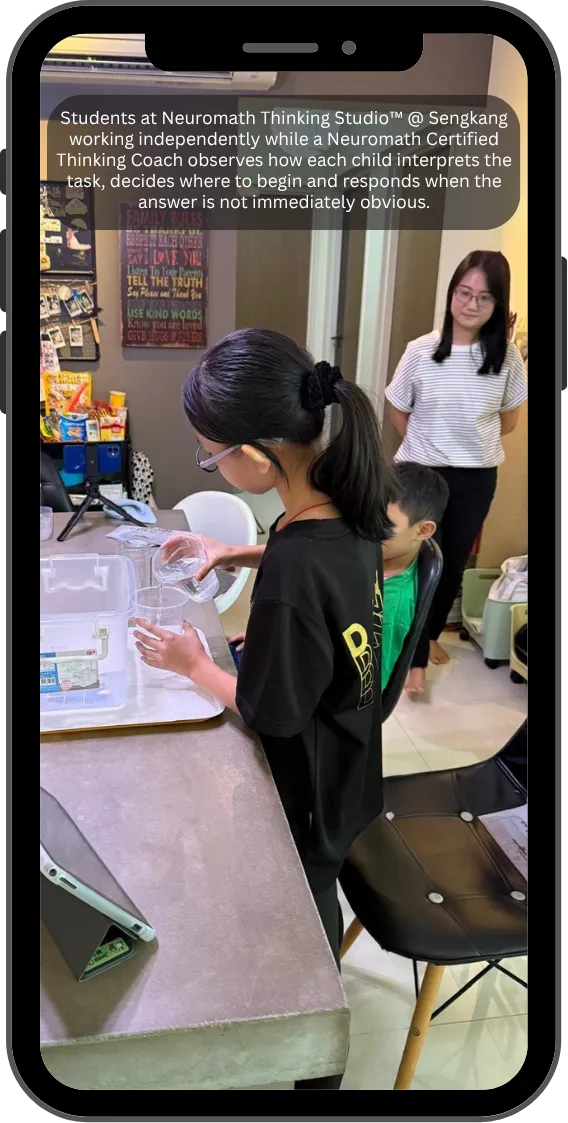
How We Observe Every Child Closely in a Group
When We Know What Is Holding a Child Back,
This Is What Can Begin to Change.
Thinking Discovery is not the transformation itself. It helps us identify the recurring thinking patterns that may be limiting a child’s progress, so we know what needs to be developed next.
When the right thinking habits are then developed, parents may begin noticing changes that go beyond marks, changes in how their child approaches math, responds to unfamiliar problems and learns more independently.
One parent shared this after her child began the recommended discovery programme:
This is the development Neuromath works towards:
First, discover what is holding your child back. Then, develop what they actually need.
A child who no longer relies on guessing...
but begins making sense of the problem before looking for the answer.
Understand Your Child. Then Decide.
The Neuromath First Thinking Experience includes:
Math learning through Neuromath’s Learn-by-Doing approach
A Parent Sharing Session After The Lesson
One concrete recommended next step
My Child’s Thinking Discovery fee: $320 (4 lessons x 1.5h)
At the end of the session, our coach will share the initial observations and explain your child's thinking strengths, the areas that may be limiting progress, and the Thinking Discovery Programme recommended for your child.
You can then decide whether continuing with Neuromath is right for your child.
Frequently Asked Questions
Is This Another Class on Top of Tuition?
Not necessarily.
If tuition is helping your child understand and work more independently, it is serving its purpose. But if your child still freezes, guesses or waits for help, adding more tuition may provide more teaching without addressing why they remain dependent.
Neuromath uses math learning to develop how children understand problems, recognise relationships, apply what they know and adapt when a familiar method does not fit.
The goal is not to add another permanent class to your child’s timetable. Begin with four lessons, understand what your child needs, then decide whether Neuromath should complement or replace their current support.
Is This Programme Only for Children Who Are Struggling?
No. Thinking Discovery is designed for both children who are struggling and children who are already doing well.
For a child who struggles, we look for the thinking patterns contributing to their difficulty or dependence on help.
For a strong child, we examine whether they can transfer what they have learnt, reason flexibly and adapt when a question looks unfamiliar.
One child may need to overcome what is holding them back. The other may need to develop beyond what their marks currently reveal.
Who Will Be Teaching and Observing My Child?
Your child's journey begins with their First Thinking Experience.
During this session, a Neuromath Certified Thinking Coach observes how your child approaches unfamiliar mathematical problems, what they notice, how they organise information, and whether they can recognise the hidden mathematical structures needed to solve them.
Throughout the programme, your coach observes:
- How your child makes sense of unfamiliar situations.
- Whether they notice the important mathematical relationships or focus only on surface details.
- How they organise information before attempting a solution.
- Whether they can transfer what they have learnt to new situations independently.
- How they respond when their first approach does not work.
Our coaches also know when to guide and when to step back, allowing your child’s independent thinking to develop naturally while making their thinking process visible.
Why do you begin with a First Thinking Experience?
Before recommending a Thinking Discovery Programme, we first need to understand how your child approaches unfamiliar mathematical problems. The First Thinking Experience allows our coach to observe your child's current thinking habits and recommend the most suitable next steps.
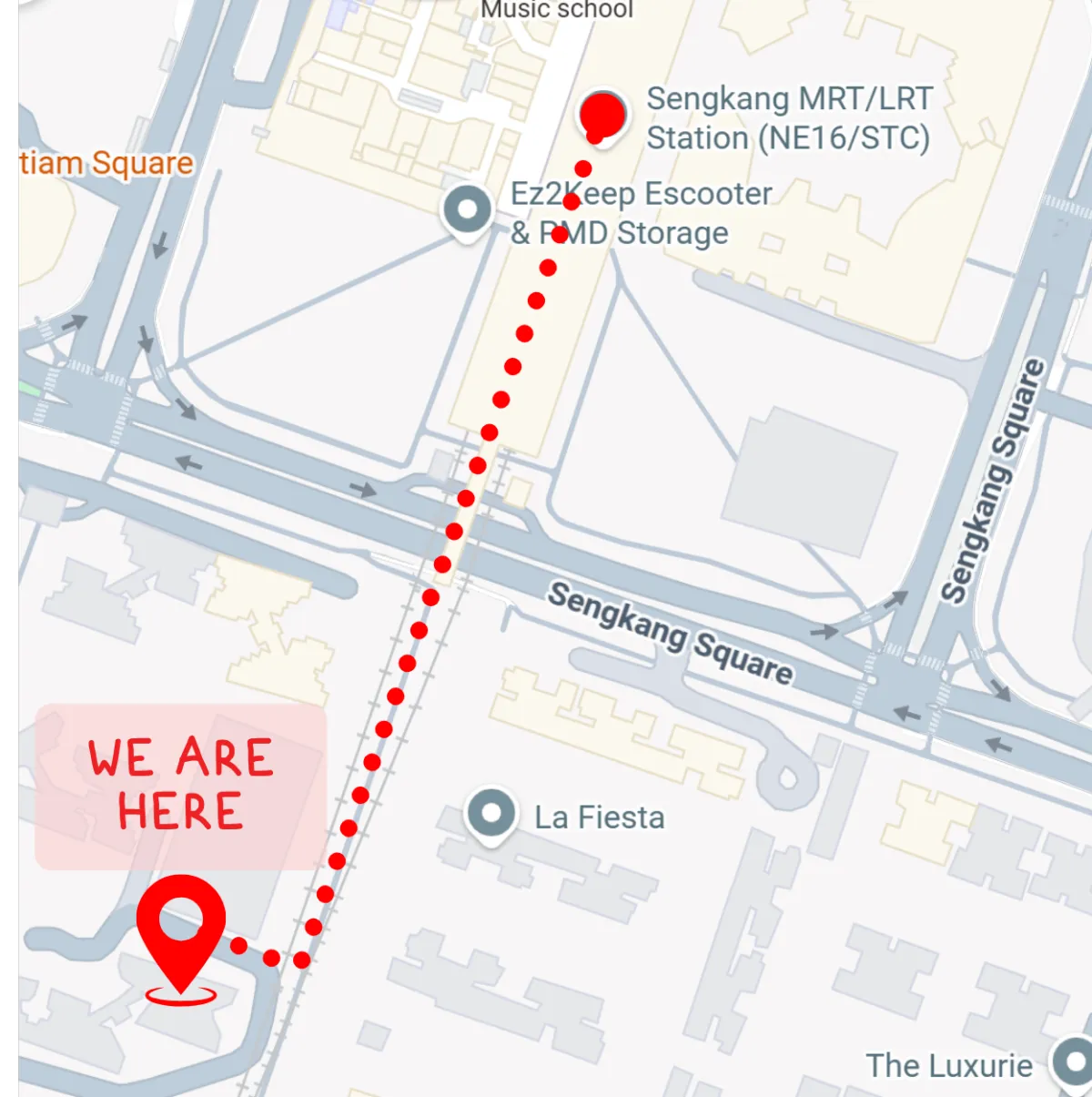
Neuromath Thinking Studio™ @ Sengkang